


Foshan: The Aluminum Capital That Controls Global Supply Chains
Foshan, a city in southern China with zero bauxite reserves, holds an outsized grip on the global aluminum supply chain. Half of the world’s aluminum profile molds are produced in a single town here: Dali, in Nanhai District.
When a Wall Street Journal reporter visited Dali, he witnessed a scene that summed up China’s unassailable manufacturing advantage: an aluminum plant pulled a failed mold off its production line, loaded it onto a three-wheeled cart, rolled it to a neighboring mold shop for adjustments, and had it back in operation that same afternoon. His conclusion reverberated across Western manufacturing circles: “Even if you move factories to Mexico, India or Vietnam, you still can’t get away from China.”
For the global aluminum industry, that statement applies first and foremost to Foshan.
A Complete Industrial Ecosystem, Not Just a Supply Chain
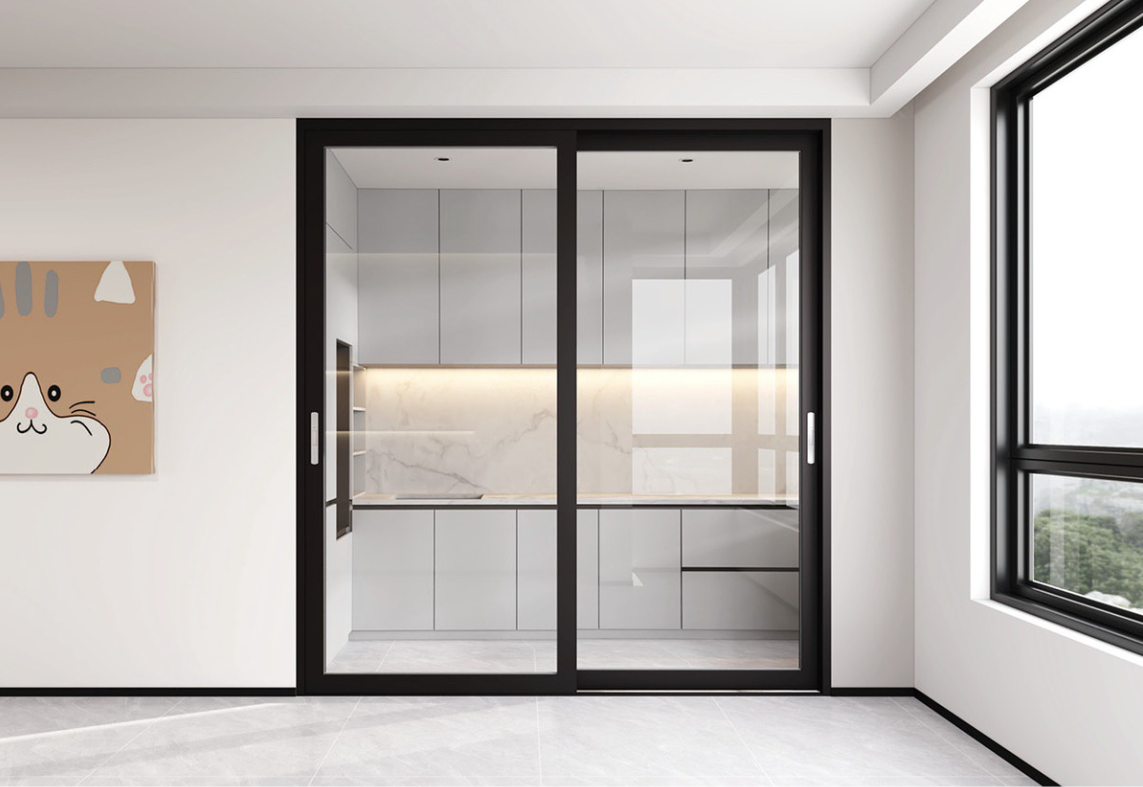
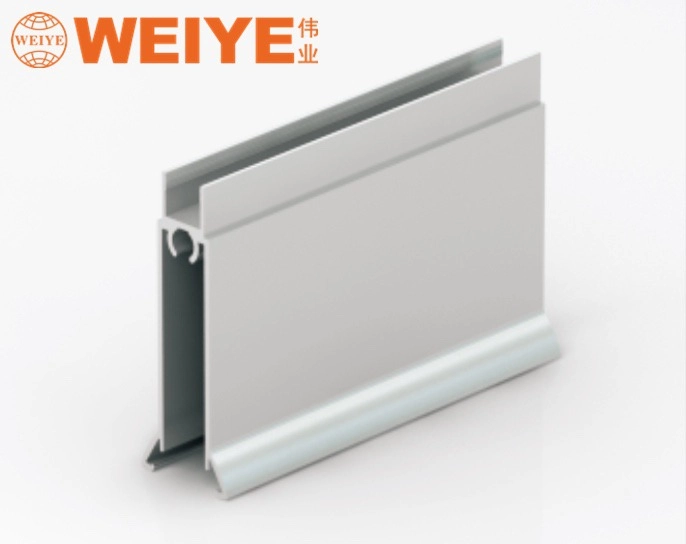
Foshan produces no bauxite, yet it hosts a fully closed aluminum industry chain spanning ingot casting, profile extrusion, mold manufacturing, surface treatment and finished products like aluminum doors and windows. The industrial belt stretches across Dali (Nanhai), Lubao (Sanshui) and Lecong (Shunde), forming a dense network of factories, distributors and component suppliers that operate entirely within one city.
This is more than an industrial chain — it is a mature industrial ecosystem. China’s aluminum furniture industry centers on Foshan, and the world’s aluminum mold industry converges on Dali. From Tesla’s battery trays and Huawei’s 5G base station heat sinks to LONGi’s photovoltaic frames, most high-end industrial aluminum products rely on molds manufactured in this small town.
A local mold factory owner put it bluntly: “If we moved our plant to Vietnam, they’d still depend on us. Over 70% of molds there are imported from China, ready to install straight out of the box. It’s not that they don’t want to make their own — they simply can’t.”
A precision deviation of just 0.03 millimeters results in uneven wall thickness in extruded aluminum profiles, which gets rejected by customers. Dali is one of the few places in the world that can deliver this level of precision consistently.
Three Flagship Enterprises: Xingfa, Fenglu, Jianmei
Foshan’s aluminum sector is not a collection of scattered small factories — it is a fleet led by three industry-leading enterprises.
Xingfa AluminumFounded in 1984 by Luo Su, a Nanhai local, Xingfa has grown into an industry pillar with seven production bases and an annual capacity of over 1 million tonnes. Its aluminum profiles were used in iconic projects including the Beijing Olympic venues and Shanghai World Expo sites.
Beyond scale, Xingfa has turned environmental compliance into a competitive advantage. It operates Foshan’s only full-service recycling base for aluminum processing waste, treating waste acid and aluminum dross while producing water treatment agents as a byproduct. Green production has become a new industry barrier. In 2025, the company recorded operating revenue of 20.701 billion yuan, up 9.79% year-on-year.
Fenglu AluminumEstablished in 1990, Fenglu made history as the first Chinese aluminum enterprise to become an official partner of China’s space program, with its products designated for aerospace use as early as 2005.
With annual revenue exceeding 10 billion yuan, Fenglu is building a new 1,100-mu industrial park in Xinxing with a 5 billion yuan investment, featuring a 20,000-ton ultra-large extrusion line — effectively building an entirely new Fenglu. Its “aerospace-grade quality” reputation remains its most powerful market asset.
Jianmei AluminumFounded in 1993, Jianmei stands out as a successful transformation case. During the real estate market adjustment, it proactively scaled back traditional construction profiles and shifted focus to NEV components, PV frames and 5G heat sinks.
The company boosted human-machine efficiency by 60%, cut unit energy consumption by over 20%, and raised management efficiency by 40% through ten digitalized systems. Instead of waiting for market trends, Jianmei is creating them.
In August 2025, Foshan’s Xianhu Laboratory, in collaboration with industry players, launched the industry’s first zero-carbon ammonia-fueled aluminum billet heating furnace, eliminating carbon emissions from the billet heating process. Cheng Yibing, an academician of the Australian Academy of Technology and Engineering, noted that this breakthrough marks Foshan’s leadership in zero-carbon combustion technology for both ceramics and aluminum processing — two high-temperature manufacturing sectors.
While Europe still debates how to implement carbon border taxes, Foshan is already delivering the solutions.
Exports: Factories Move Out, Mold Orders Grow
In 2025, Foshan’s exports of aluminum doors and windows rose 35% year-on-year. Huachang Group alone generated 200 million yuan in exports to Belt and Road countries, up 25%, with products sold in over 70 nations. In April 2026, Foshan organized a delegation of nearly 50 entrepreneurs to Central Asia; the city’s exports to the five Central Asian countries reached 3.15 billion yuan in 2025, up 22.5%.
Yet a counterintuitive trend defines the market: Aluminum processing plants are relocating to Vietnam and Malaysia — but their molds still come from Dali.
Every new production line opened in Vietnam requires a fresh batch of molds imported from Dali. Southeast Asia has become the fastest-growing market for Dali’s mold industry. The gap in precision is not just about 0.03 millimeters — it is a full generational gap in steel heat treatment, wire cutting accuracy and surface nitriding technology.
The faster exports grow, the more orders flow to Dali’s mold makers. This is the real bottleneck in the global aluminum industry: not the metal itself, but the manufacturing capability behind it.
Customs data shows that China exported 597,550 tonnes of unwrought aluminum and aluminum products in April 2026, up 15% year-on-year and 112,400 tonnes higher month-on-month. Analysts at CITIC Construction Investment point to overseas supply gaps as the core driver: geopolitical instability in the Middle East has shut down or reduced nearly 2.69 million tonnes of production capacity, accounting for 3.58% of global operating capacity.
The world is looking for alternative aluminum supply — and Foshan is the answer.
2030 Vision: Opportunities and Challenges
At the end of 2025, Nanhai District officially released the High-Quality Development Plan for Aluminum Processing Industry (2026–2030), with clear strategic goals:
Three core positioning: China’s aluminum capital, national benchmark for green aluminum profiles, national stronghold for industrial aluminum profiles
Two industrial hubs: Shishan “Industrial Aluminum Valley” and Dali “Recycled Aluminum Valley”
But challenges are tangible. The EU Carbon Border Adjustment Mechanism (CBAM) hangs over export-oriented enterprises. Once carbon tariffs extend to downstream aluminum products, Foshan exporters will need to provide full-chain carbon footprint data. New outbound investment regulations effective July 1 also require compliance reviews for technology, data and personnel transfers overseas — raising boundary questions for the industry, such as whether sending engineers to Vietnam to adjust mold parameters counts as cross-border technical dispatch.
Domestic pressures are also mounting. SMM data from May 2026 shows the overall operating rate of China’s aluminum processing industry at just 64.2%, with aluminum profile operating rates as low as 56.1%. Demand for construction profiles remains weak, PV frame production schedules eased in May, and aluminum billet processing fees have stagnated. Upstream electrolytic aluminum producers are enjoying record profits of around 8,700 yuan per tonne, squeezing margins for downstream processors.
Yet exports remain a lifeline pulling the industry through the downturn.
Why Foshan? Because This Ecosystem Can’t Be Relocated
When someone asked a Dali mold factory owner what gives the local industry its biggest advantage, he smiled and replied: “Technical barriers aren’t built from one or two patents. They’re built from thousands of factories, tens of thousands of skilled workers, and decades of accumulated experience — all within a five-kilometer radius. This kind of ecosystem can’t be moved. It can’t be copied.”
That is the true strength of Foshan aluminum. It is not any single company’s dominance. It is the entire industrial chain, the whole town, the entire city — grown into an ecosystem you cannot bypass. Within five kilometers of Dali, there are dozens of mold factories, over 120 aluminum profile producers, and more than 2,000 upstream and downstream enterprises. When one link hits a problem, the solution is right next door.
Italy’s Compes charges hundreds of thousands of yuan for a complex hollow profile mold, with a lead time of two to three months. If something goes wrong, shipping it back to Europe for repairs takes at least two weeks round trip.
In Dali? The same functionality costs one-third the price. If a test run fails, load it onto a three-wheeler, take it next door, get it fixed that afternoon, and put it back into production that evening.
This “three-wheeler speed” is unimaginable for European or Japanese manufacturers.
The world can build ten thousand aluminum factories. But there is only one Dali.
Foshan does not just control one component of the global aluminum supply chain. It holds the key to the entire industry’s operational capability. Every time a factory in Vietnam opens a new production line and orders molds from Dali, it becomes clear: This city without a single bauxite mine is the real “Aluminum Capital of China.”